The Role of a Genetic Counsellor in Epilepsy Care | Nicole Liang, Genetic Counsellor
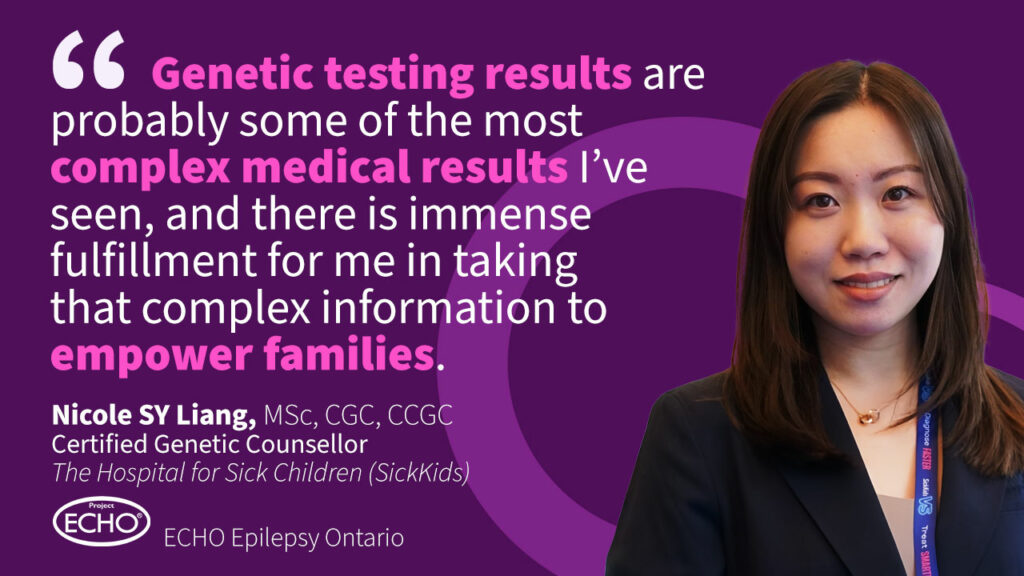
November marks #GeneticCounsellorAwarenessDay. In recognition we’re celebrating the critical role of genetic counsellors in epilepsy care and in the ECHO Epilepsy Ontario knowledge translation program and its interprofessional community of practice. We’re privileged to profile Nicole Liang, MSc, CGC, CCGC – Genetic Counsellor at The Hospital for Sick Children (SickKids), who is also a member of our hub leadership team delivering our Genetics & Epilepsy program. #GCAwarenessDay
What inspired you to enter the field of genetic counselling?
As much as I was fascinated by genetics and genomics in school, it was some of my early observational genetic counselling appointments that inspired me to pursue this field. Genetic testing results are probably some of the complex medical results I’ve seen, and there is immense fulfillment for me in taking that complex information to empower families.
What population do you work with (children, youth, adult) and what challenges/rewards do you experience in this profession?
As a genetic counsellor working in a paediatric hospital, I mainly interact with parents after their child receives a new genetic diagnosis. However, I also get to meet children and adolescents to talk about their genetic conditions in an age-appropriate manner.
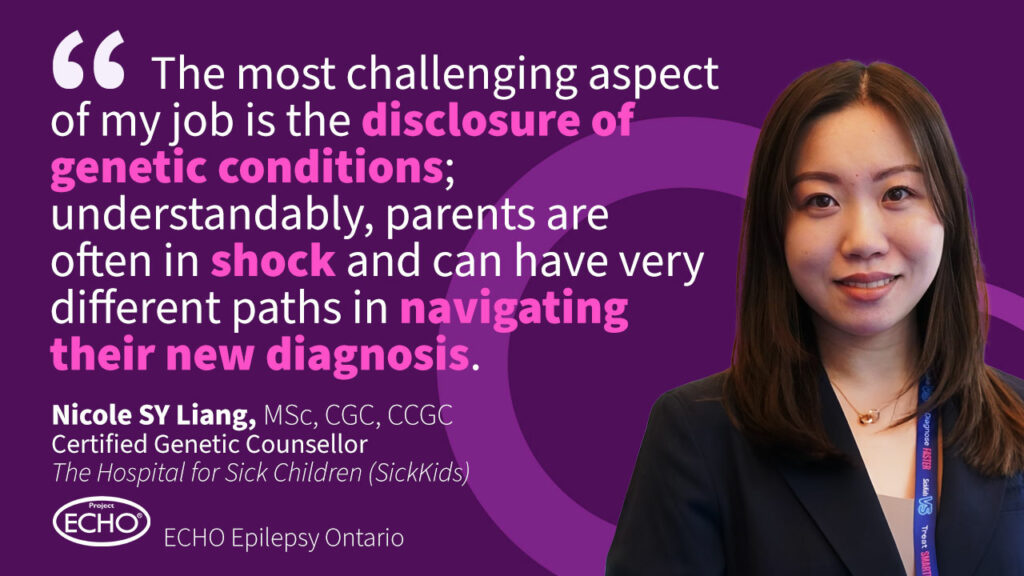
The most challenging aspect of my job is the disclosure of genetic conditions; understandably, parents are often in shock and can have very different paths in navigating their new diagnosis. However, as a genetic counsellor working in epilepsy, often, the genetic test results provide the care team guidance on treatment options and additional support for the family.
What is one thing you wish people knew about your role as a genetic counselling in epilepsy?
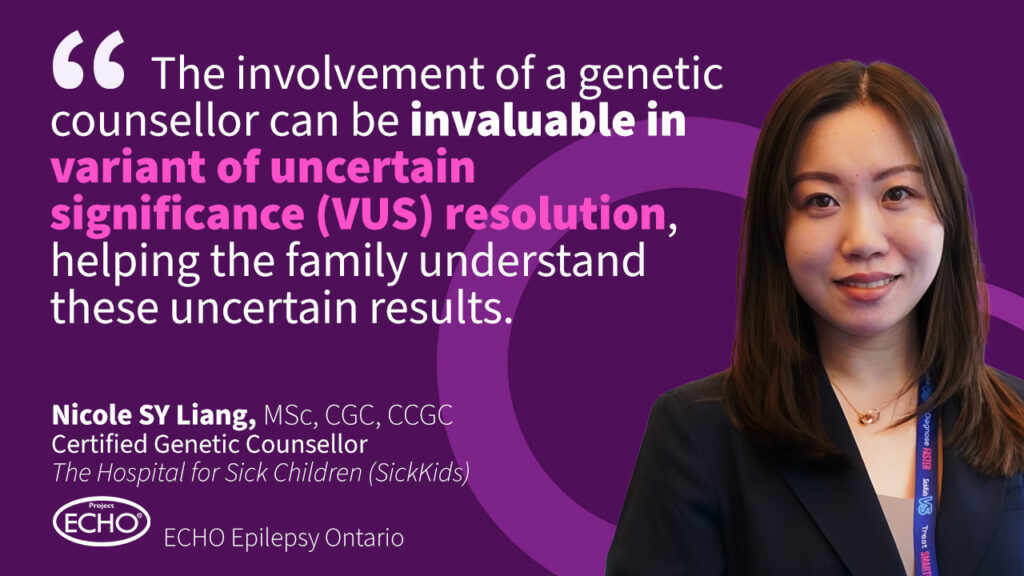
One of the most common results from genetic testing is a variant of uncertain significance (VUS). Some of these VUS are unlikely to be clinically relevant, but some may warrant further investigations. The involvement of a genetic counsellor can be invaluable in VUS resolution, and is most important in helping the family understand these uncertain results.
The interdisciplinary make-up of ECHO is a key aspect of its education and support model. What’s one key thing that you’ve learned in being part of this interdisciplinary team, regarding supporting/treating people living with epilepsy?
It is so valuable for me to understand the perspectives and challenges of neurologists and clinicians in Ontario (and from around the world) because I find that clinical genetic services can often be siloed to tertiary hospitals. Along the same vein, because I am not trained in medicine, I also get to learn so much about epilepsy during these sessions which allows me to be a better clinician for my patients.
Learn More about Epilepsy | Upcoming Sessions
Want to learn more about Genetics & Epilepsy and managing epilepsy in Adults and Children & Youth? Join our upcoming sessions for clinical pearls and supportive interprofessional discussions of real patient cases.
Testimonials: ECHO Epilepsy "In My Words"